South Africa Executive Protection | Cape Town, Johannesburg, and the UHNW Threat Landscape
In this article
- Johannesburg: the highest-risk operating environment
- Cape Town: seasonal UHNW environment and different risk profile
- Armed capability and PSIRA licensing
- Game reserve and adventure travel security
South Africa's crime statistics are among the worst globally for a country with a functioning developed economy: approximately 80 murders per day, carjacking rates that place the country among the top globally, and a pattern of targeted attacks on UHNW residences and individuals that is more sophisticated and better organised than casual criminal opportunism. For UHNW principals visiting Cape Town for the summer social season, Johannesburg for business, or the wider country for game reserve and leisure purposes, the protective posture required is substantially more intensive than a European equivalent. FFGR's South Africa capability reflects deep, region-specific operational experience and a deeply embedded understanding of the threat landscape by region, time of year, and principal profile.
Johannesburg: the highest-risk operating environment
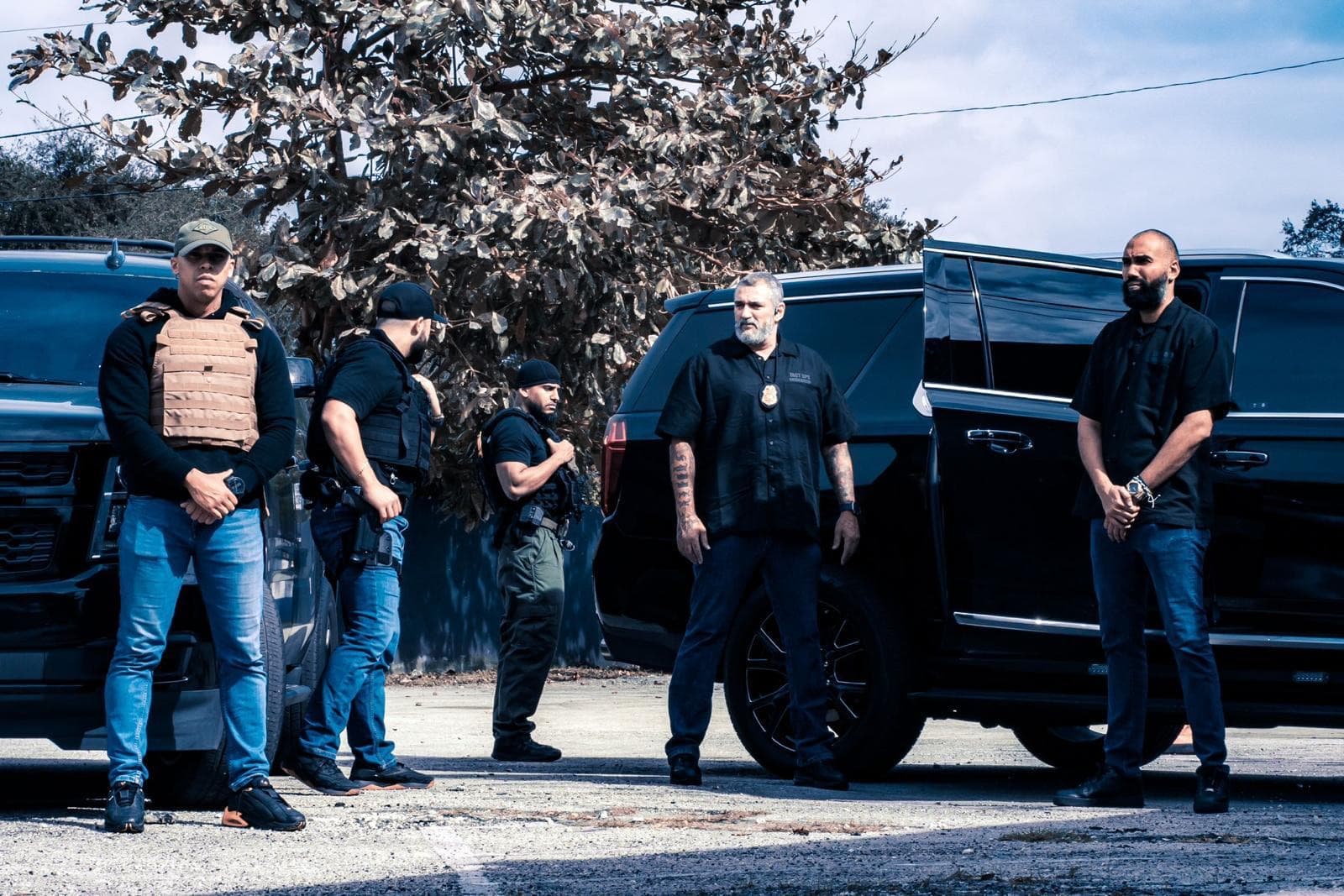
Johannesburg, and particularly the broader Gauteng province, represents the most challenging operational environment in South Africa. The city has a high rate of business robberies, vehicle-based crime, and targeted approaches against individuals identified as wealth-bearing. Principals conducting business in Johannesburg require: vetted, armed protective driving with counter-surveillance capability; pre-advance of all venues including restaurant approaches, parking arrangements, and secondary exit routes; secure accommodation in properties with tested access control; and a clear emergency protocol in the event of an incident. The primary vulnerability pattern in Johannesburg is the parking-area and gate approach, the moments of entering and exiting a vehicle at a fixed location, and protective driving discipline around these transition points is the single most important operational consideration. FFGR's Johannesburg teams use vehicles that are known to the local criminal environment as professional close protection vehicles; this functions as a deterrent in itself.
Cape Town: seasonal UHNW environment and different risk profile
Cape Town attracts a large concentration of UHNW visitors during the South African summer (November to March), particularly for the social season centred on the Waterfront, Constantia wine estates, and the Atlantic Seaboard properties in Clifton and Camps Bay. The risk profile in Cape Town is different from Johannesburg: lower probability of business-district criminality, higher exposure to property invasion and beach-area crime. The townships surrounding Cape Town, some of which sit directly adjacent to UHNW residential areas in the Southern Suburbs, contain gang activity that occasionally spills into adjacent areas. Route discipline is critical in Cape Town: the scenic coastal roads that principals and their families use naturally create predictability that alert criminal networks exploit. FFGR's Cape Town mandate planning includes route variation protocols, residential security assessment for rental properties, and boat security advisory for principals arriving or moving via the V&A Waterfront.
Armed capability and PSIRA licensing
South Africa is one of the few jurisdictions in the world where armed close protection is routinely required rather than exceptional. All FFGR close protection officers operating in South Africa carry firearms and are licensed under the Private Security Industry Regulatory Authority (PSIRA): South Africa's mandatory licensing regime for security professionals. The firearms licensing framework under the Firearms Control Act requires security professionals to be registered and their weapons cleared; FFGR's South Africa operations are fully PSIRA-compliant and operate within the legal framework at all times. For international principals arriving with their own protection team, it is important to note that foreign close protection officers cannot legally carry firearms in South Africa without PSIRA registration; FFGR provides an augmentation and lead-team capability that gives the principal's existing team a compliant, armed local element that knows the operating environment.
Game reserve and adventure travel security
A significant portion of UHNW South Africa engagements involve game reserves, the Kruger area, the Sabi Sands, KwaZulu-Natal reserves, where the security environment changes from urban crime to a different set of exposures: road travel through poorly policed rural areas, remote medical emergency response, and the occasional intersection with poaching and criminal activity that operates in game reserve buffer zones. FFGR's game reserve capability includes medical-capable officers, satellite communication, emergency evacuation planning with medical aviation services, and an understanding of which reserves have adequate private security infrastructure versus those requiring more comprehensive self-sufficient protection arrangements. For principals traveling by private aircraft into bush airstrips, airport-equivalent security is established at the strip itself.
Discuss this with a coordinator
If a specific situation in this article is relevant to a current or upcoming requirement, a senior coordinator will respond within sixty minutes : confidential, no obligation.