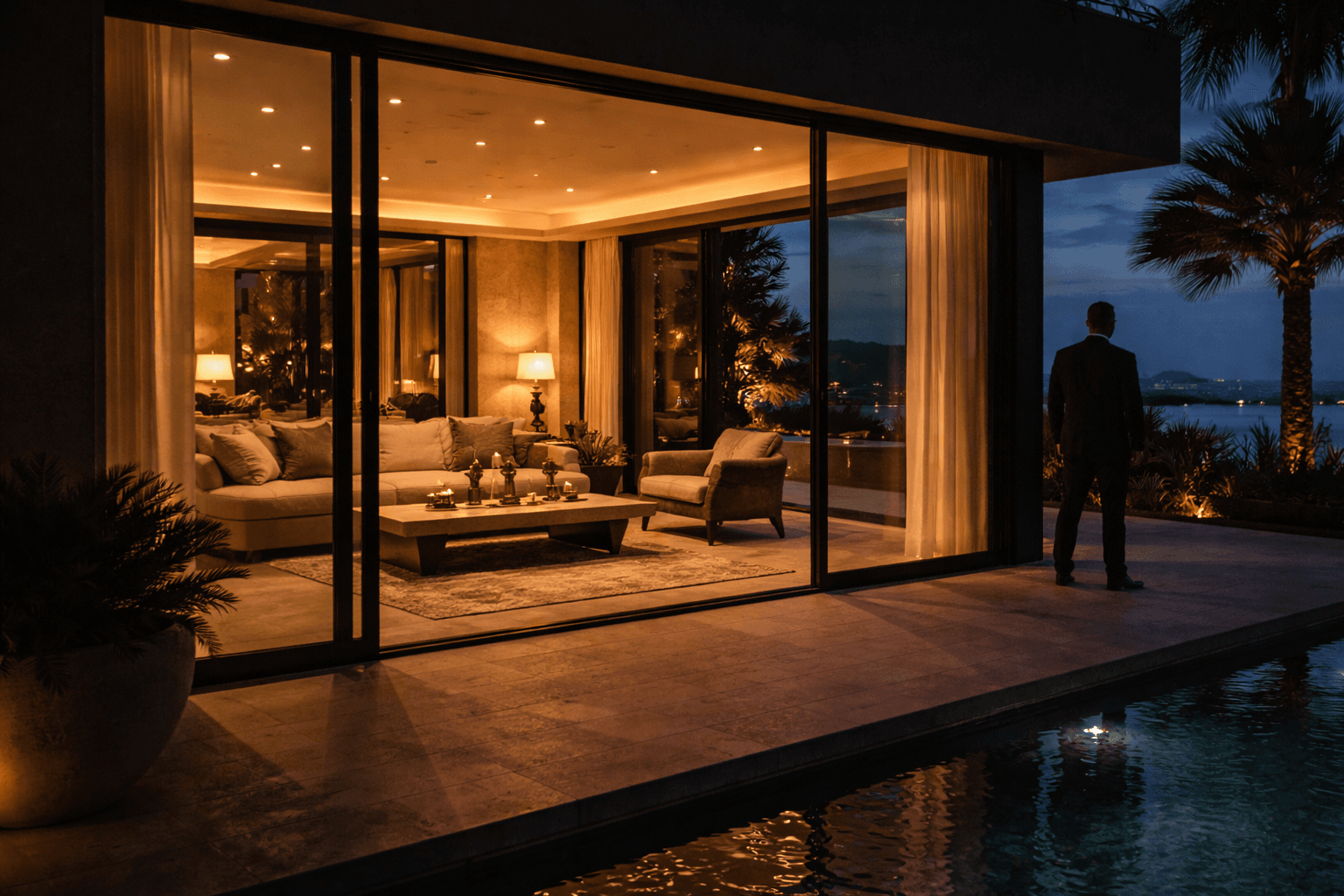
Counter-Drone Measures for UHNW Estates and Residences
In this article
- Detection: knowing when a drone is present
- Deterrence and legal constraints
- Response protocol: what to do when a drone is detected
The proliferation of consumer-grade and commercial drones has created a persistent surveillance threat that UHNW residences, private estates, and principals in exposed locations are increasingly encountering. A drone with a 4K camera and a thirty-minute flight time can conduct systematic surveillance of a property's perimeter, photograph interior spaces through windows, identify security camera positions and coverage gaps, and document the movements of residents and staff: all from outside the property boundary and therefore outside the reach of standard perimeter security measures.
The threat is not hypothetical. FFGR has encountered client situations involving paparazzi drone surveillance of private residences, competitor intelligence operations using commercial drones to photograph a principal's visitors and schedule, and intrusive media attempts to capture private content from aerial platforms. Counter-drone capability is now a standard consideration in residential security programmes for properties in or near urban areas, or in locations where aerial access is otherwise available.
Detection: knowing when a drone is present
Detection is the first layer of any counter-drone programme. Commercial radio-frequency (RF) detection systems identify drone control signals in the vicinity of a property, alert the security operator to the presence of a drone before it becomes visible, and in some configurations can determine the direction of origin and the type of drone. Acoustic sensors can identify the audio signature of a drone at closer range. Optical sensors, cameras with drone-detection analytics, can confirm visual presence and track the drone's flight path. FFGR assesses the appropriate detection layer for each property based on location, typical threat profile, and the existing camera and monitoring infrastructure.
Deterrence and legal constraints
Active counter-drone measures, RF jamming, signal spoofing, directed energy, are subject to strict legal restrictions in most jurisdictions and are not available to private operators without specific regulatory authorisation. The exception is some high-security government facilities and royal residences. For private UHNW properties, deterrence is therefore achieved through passive and architectural means: window film that prevents optical surveillance from aerial angles, vegetation screening, canopy structures over terrace and pool areas, and, where planning permits, physical screening elements at the property boundary. FFGR provides architectural security advisory on passive counter-drone measures as part of residential security design.
Response protocol: what to do when a drone is detected
When a drone is detected over or near the property, the response protocol has four elements: move the principal and family into the interior of the residence (away from windows and outdoor spaces), document the drone's flight path, appearance, and registration markings if visible, report to the relevant aviation authority (in most countries, unauthorized drone flights over private property are a regulatory offence), and, if the drone is operating in a way that constitutes harassment or surveillance, preserve the documentation for potential legal action. FFGR's residential teams are trained in this response protocol and, in ongoing residential mandates, maintain a drone incident log for use in any subsequent legal proceedings.
Discuss this with a coordinator
If a specific situation in this article is relevant to a current or upcoming requirement, a senior coordinator will respond within sixty minutes : confidential, no obligation.